Most volunteers don’t stop showing up because they stop caring. They stop showing up because serving starts to feel harder than it should be.
A typical week for a volunteer might involve juggling work, family, and commutes just to make it to a two-hour shift. When the reminder doesn’t go out, the schedule changes at the last minute, or the sign-in sheet has the wrong time, it sends a quiet message that your effort is expendable. After a few mix-ups, even the most committed people start to drift away.
On the other side of that missed shift is usually a small team doing its best with email threads, shared spreadsheets, and manual updates. They’re not short on passion. They’re short on tools that keep everyone aligned without endless copy-paste work.
This is where the strain begins for many nonprofits. The mission grows. The number of volunteers grows. But the way you coordinate them doesn’t. Scheduling, attendance, and communication become a daily fire-fight, and the very sense of connection that draws people in starts to fray.
That’s why more nonprofits are looking closely at how they schedule, track, and support volunteers and why purpose-built volunteer management software is becoming less of a “nice to have” and more of a way to protect the relationships their mission depends on.
Why Do Nonprofits Still Rely on Spreadsheets?
Despite the friction they cause, Spreadsheets remain the default tool for many nonprofits. Here’s why:
- Already available in most organizations: With tight budgets, nonprofits often choose tools that don’t require upfront investment. Many users prefer Spreadsheets because they are free and can be installed easily on any device at no additional cost.
- They offer a sense of control and ownership: Coordinators can open a spreadsheet, make changes instantly, and move on. There’s no IT request, no permission workflow, no system dependency. In fast-moving environments, that immediacy feels empowering even when it introduces risk.
- They’re familiar and rooted in history: Staff and volunteers already know how to use them, so there’s no need for training, especially in fast-paced environments. Many organizations have been using the same attendance sheets and roster formats for years. New coordinators inherit them. Minor tweaks get layered on. Over time, it becomes “how we’ve always done it,” even if no one fully trusts the data anymore.
- They appear flexible for multi-program operations: When nonprofits run multiple programs, locations, or events, Spreadsheets feel adaptable. Each program gets its own tab. Each coordinator keeps their own copy. On the surface, it looks manageable.
But this is where the real pain starts.
Multiple versions begin circulating. One file lives on a shared drive. Another is emailed. A third is duplicated “just in case.” No one knows which version is the master. Updates collide. Tabs contradict each other. At reporting time, teams debate which numbers are correct instead of focusing on outcomes.
Spreadsheets doesn’t fail dramatically. They fail quietly through overwritten cells, missing hours, inconsistent totals, and growing uncertainty about what information can actually be trusted.
That uncertainty is usually the tipping point. Not when Spreadsheets stop working, but when they stop providing clarity. That’s when nonprofits begin exploring volunteer time tracking software designed to act as a single source of truth.
Five Reasons to Switch to Volunteer Tracking Software
Modern platforms aren’t just about automation; they’re about restoring clarity, connection, and confidence. Here’s how:
1. Track Volunteer Hours Accurately
Manual volunteer time tracking is one of the most significant pain points for coordinators. One missed cell or formula can throw off an entire report, creating stress for staff and confusion for funders.
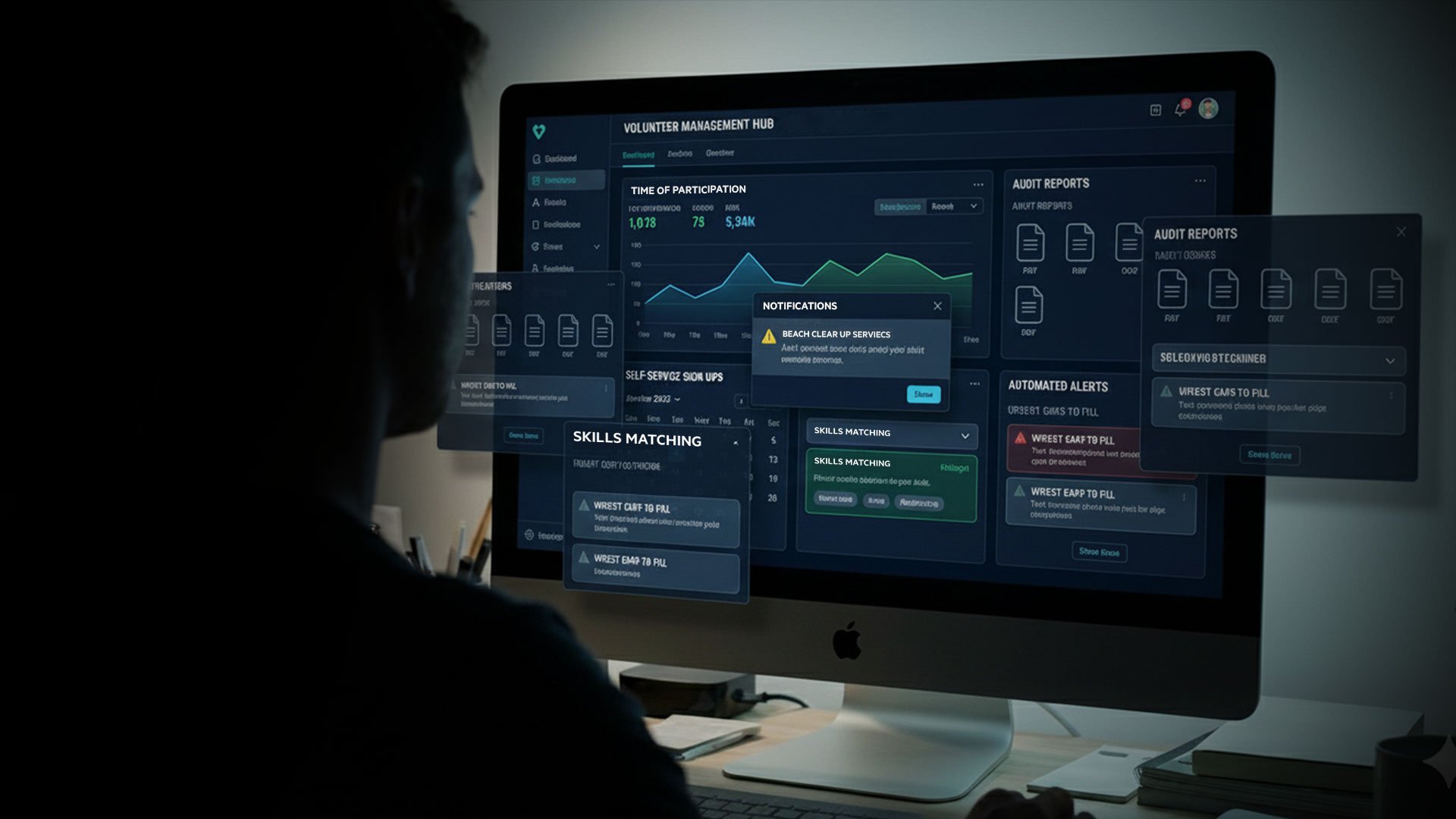
Volunteer management software logs hours automatically as volunteers check in and out, offering:
- Real-time visibility into participation
- Audit-ready reports in seconds
- No more chasing down missing data
Whether you’re managing a small team or hundreds of volunteers, a reliable volunteer hours tracker ensures fewer missed shifts, more accurate reporting, and volunteers who feel their time is valued.
2. Meet Volunteers Where They Are, On Their Phones
Today’s volunteers expect mobile-friendly tools. They want to sign up, check schedules, and log hours from their phones, rather than digging through emails or downloading spreadsheets.
Modern volunteer time tracking software offers:
- Mobile apps for Android and iOS
- Push notifications for shift reminders
- Self-service portals for sign-ups
- Real-time availability updates
This means less confusion, more convenience, and a better experience for the people powering your mission.
3. Smarter Scheduling and Role Matching
Need to fill a last-minute shift?
Unsure who’s available or best suited?
Manual coordination can’t keep up, use the volunteer platform built-in intelligence to:
- Match volunteers with roles based on skills and interests
- Avoid duplicate matches and scheduling conflicts
- Fill gaps with automated alerts
This means smoother events, happier volunteers, and less stress for your team, all powered by smart volunteer tracking software.
4. Better Reporting = Stronger Fundraising
Funders want proof, not just passion. However, when data resides in scattered spreadsheets, reports can take hours and often fall short of the mark.
With built-in reporting tools, you can:
- Generate one-click reports for stakeholders
- Visualize trends and impact over time
- Connect volunteer activity directly to mission outcomes
This means volunteers feel seen, funders stay informed, and your programs gain credibility, especially when backed by robust volunteer time tracking software.
5. Security, Compliance, and Peace of Mind
Spreadsheets stored on shared drives are vulnerable to loss, theft, or accidental deletion. That’s a risk no nonprofit should carry.
Volunteer time tracking software offers:
- Role-based access control
This means sensitive data stays protected, and your organization stays trusted.
The Future of Volunteer Engagement
Volunteer tracking software is no longer just about coordination; it’s about fostering meaningful connections. As nonprofits grow, so do the expectations of volunteers, funders, and the communities they serve.
Modern platforms help organizations shift from:
- Coordination → Connection
The future isn’t just digital, it’s intentional. And it starts with systems that support the people behind your mission.
